
A new Pico device, highly likely to be the upcoming Space Pro, has received FCC certification.
The FCC is the US regulatory agency with responsibility over wireless frequency use. Its approval is necessary to sell a device with wireless capabilities in the US market.
Pico and TikTok owner ByteDance publicly teased its next headset back in March, calling it 'Project Swan'.
Pico said the headset will have micro-OLED panels with 4000 pixels per inch (PPI), a dual-chip architecture with a self-developed coprocessor for computer vision and image processing, and a new main processor that will have twice the CPU and GPU performance of the Snapdragon XR2 Gen 2 in today's Pico 4 Ultra and Meta Quest 3 headsets. It also detailed many of the visionOS-like features of Pico OS 6 and the RealityKit-like Pico Spatial Engine.
 David Heaney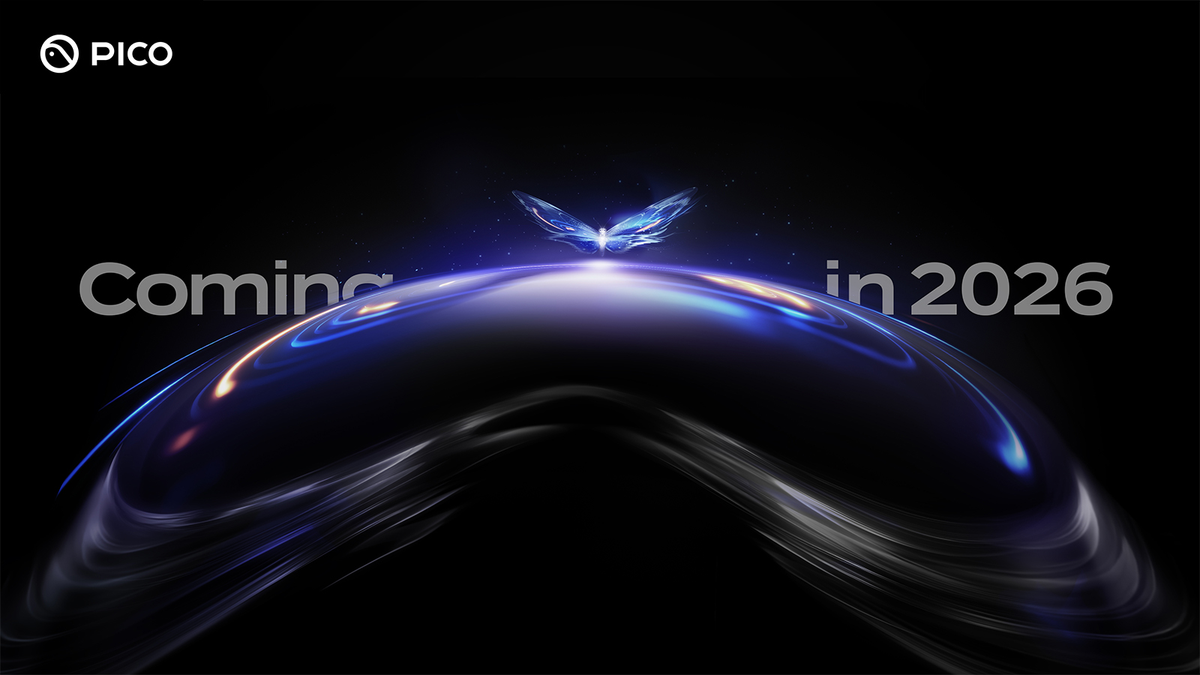
Pico simultaneously opened applications for a "Global Early Access Program" that provided closed beta access to Pico OS 6 and the Project Swan headset.
The company said it would choose "a select few with deep expertise across XR platforms" to join the program, and wanted "rigorous feedback" on the hardware and software before a wider release.
While the company showed a stylized silhouette of the headset, it did not show an actual image or render, nor did it give any details at all about the design.
Then, in June, videos depicting the design were found to be present in a public Pico SDK.
 David Heaney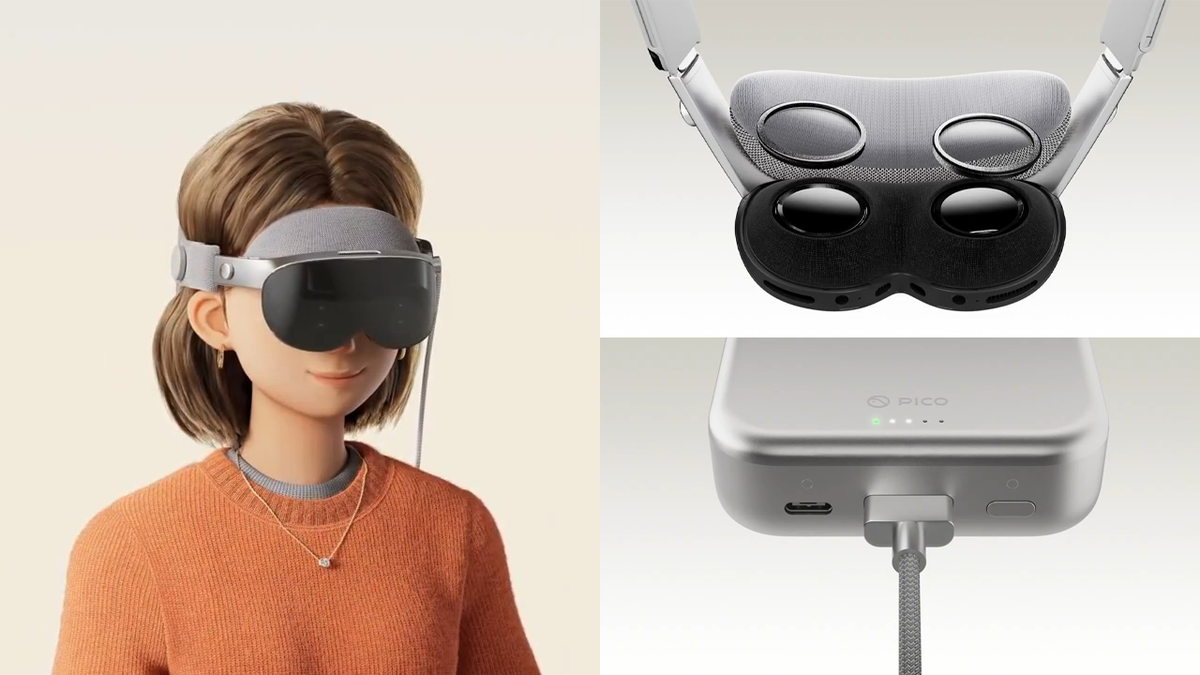
The clips show a headset that is clearly inspired by both Apple Vision Pro and Samsung Galaxy XR, with a rear strap almost identical to the former's Solo Knit Band and a visor and forehead pad strongly resembling the latter. They also show an external tethered puck.
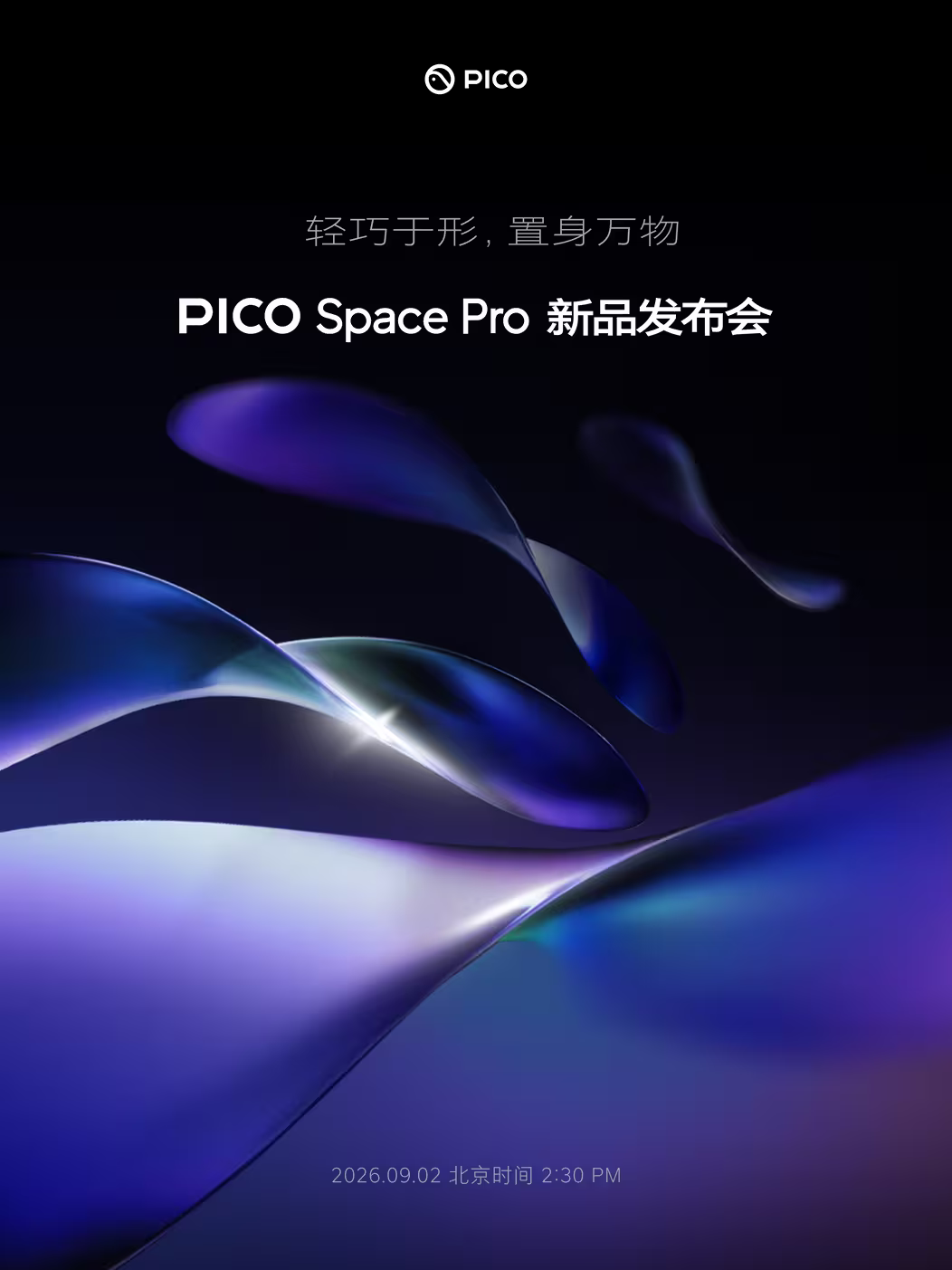
In August, the company announced a launch event for the device via Asia-region social media channels, and also revealed the product name to be Pico Space Pro.
Machine translation into English:
Lightweight in form, immersed in everything
PICO Space Pro Product Launch Event
September 2, 2026 - 2:30 PM Beijing Time
PICO 2026 新製品発表会
— PICO XR Japan【公式】 (@PICO_Japan) August 19, 2026
軽やかに、美しい世界へ
2026.09.03(木)16:00〜
その日を、楽しみに。#PICO #PICOSpacePro pic.twitter.com/MMAWHdbcAh
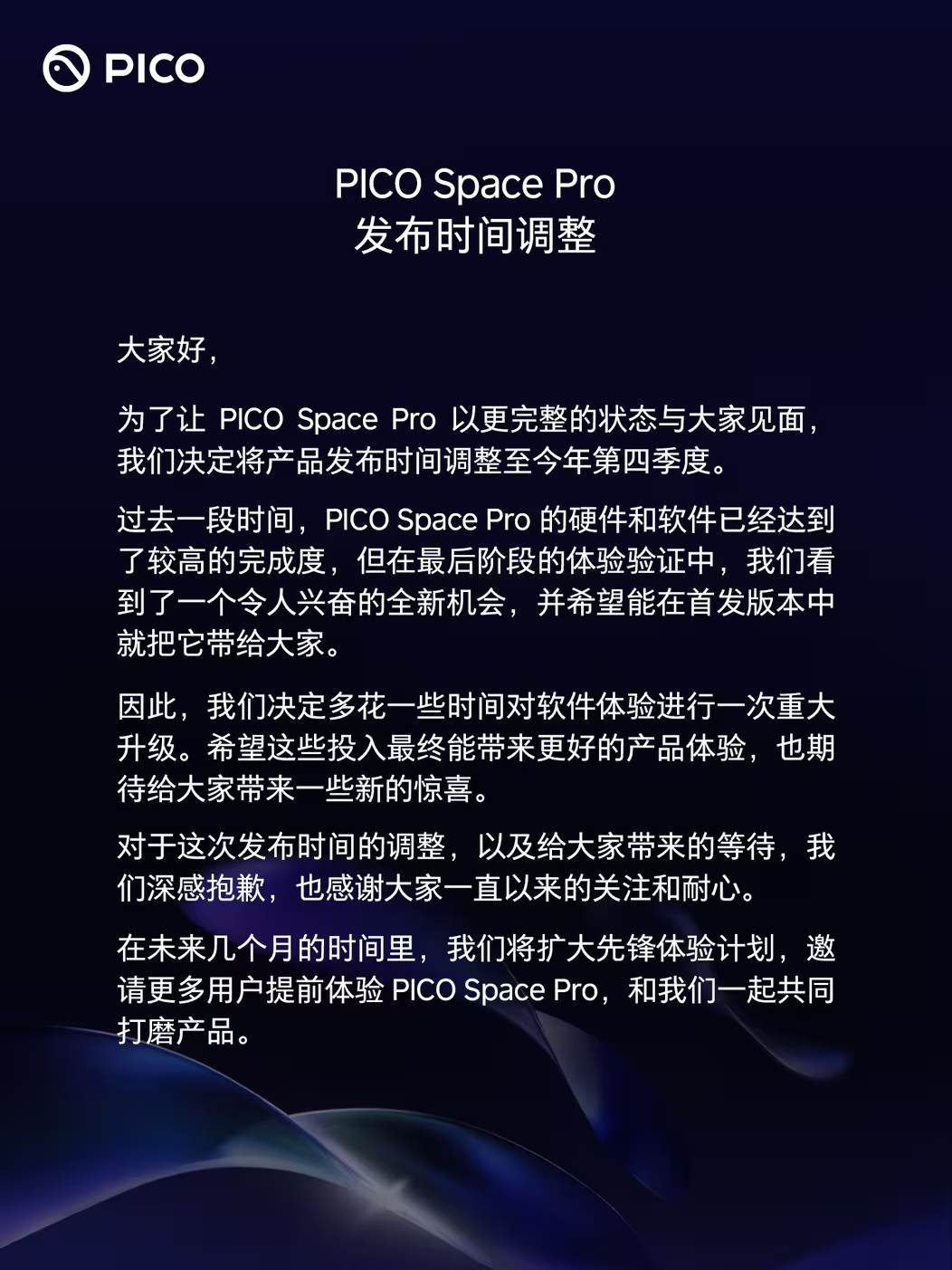
However, just days later, the company abruptly announced the cancelation of the event, and noted that the device would be delayed to Q4 2026.
Machine translation into English:
PICO Space Pro
Release Schedule Adjustment
Hello everyone,
To bring you PICO Space Pro in a more complete form, we have decided to move its release to the fourth quarter of this year.
Over the past few months, PICO Space Pro’s hardware and software have reached an advanced stage of development. However, during the final phase of user-experience testing, we discovered an exciting new opportunity, and we hope to include it in the initial release.
We have therefore decided to spend more time making a major upgrade to the software experience. We hope this effort will ultimately deliver a better product experience and bring you some new surprises.
We sincerely apologize for this change to the release schedule and the additional wait, and thank you for your continued interest and patience.
Over the coming months, we will expand our early-access program, inviting more users to try PICO Space Pro ahead of release and work with us to refine the product.
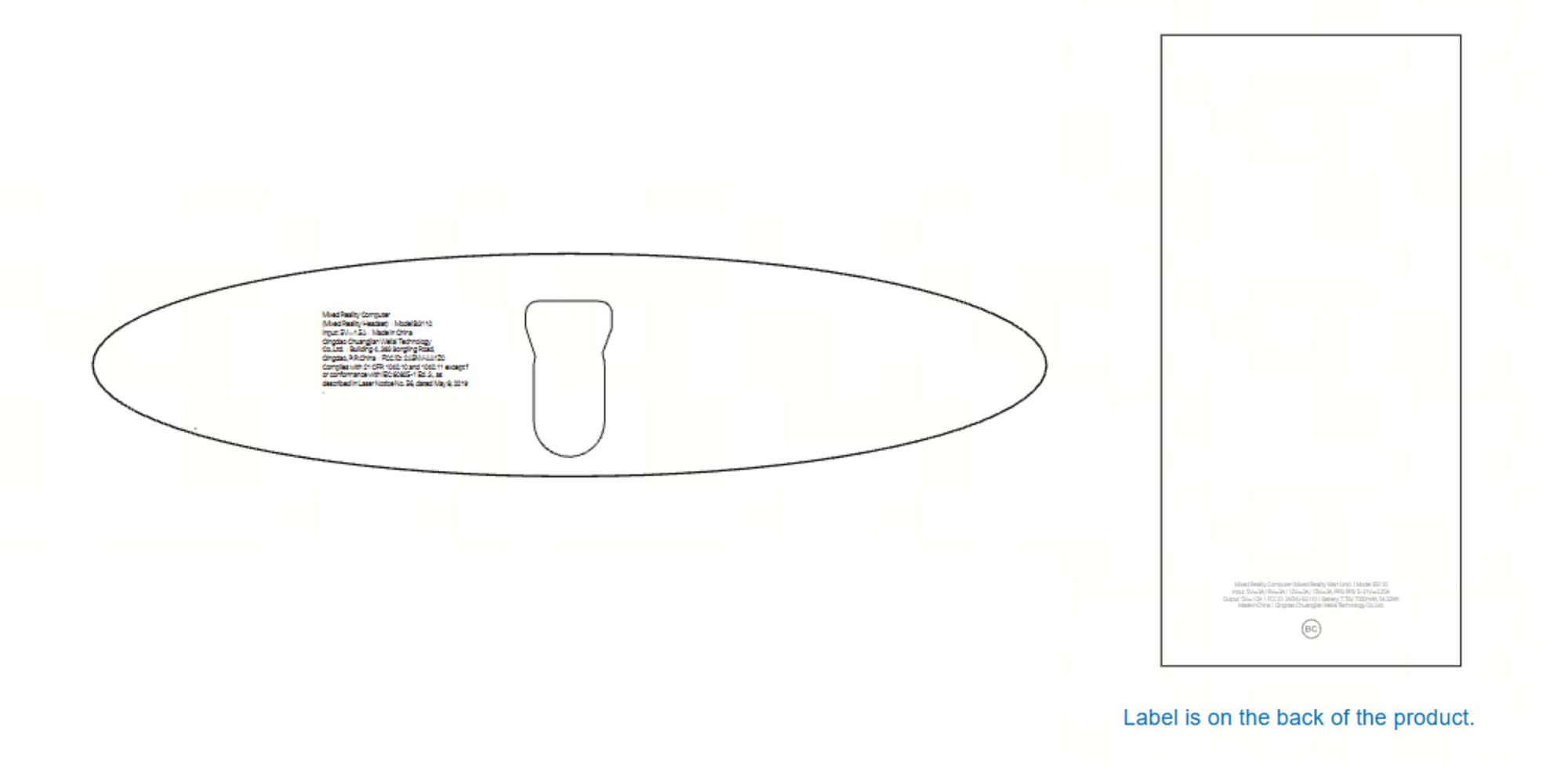
Now, in September, Pico Space Pro appears to have received FCC certification one day before its originally planned launch event. The filings list a "Mixed Reality Computer", with separate entries for the headset and external tethered puck under FCC IDs 2A5NV-AA1Z0 and 2A5NV-B3110, respectively.
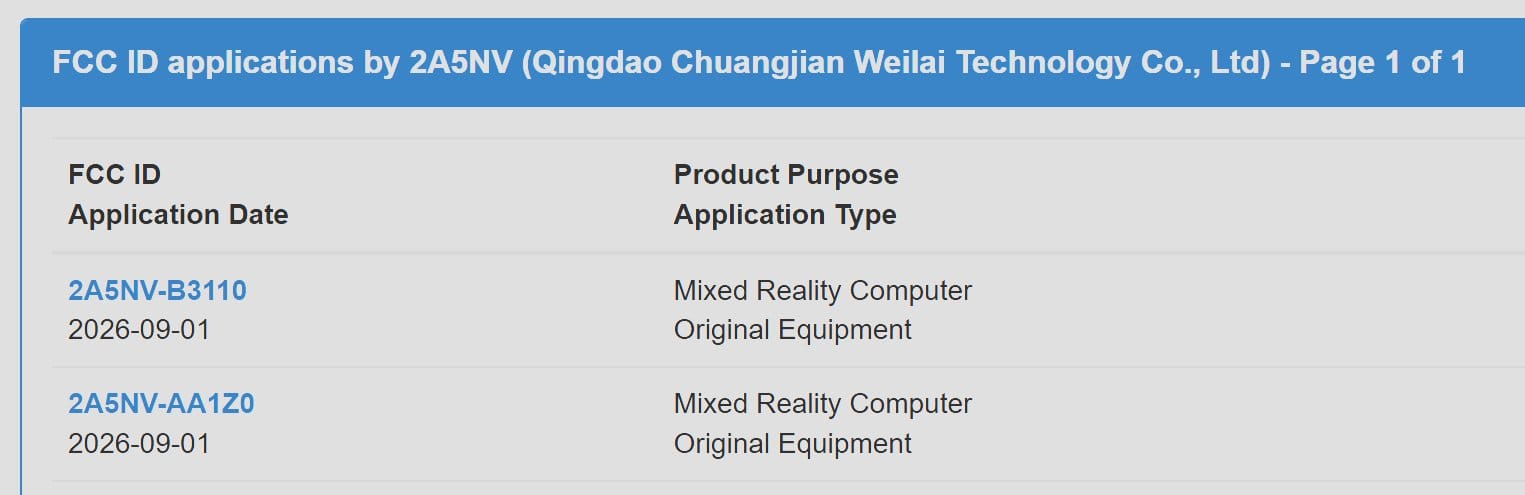
Some documents in the FCC filings are withheld under short- and long-term confidentiality requests, but the labels are publicly available. The headset's label appears in a PDF named "HMD铭牌_镭雕20060520", while the puck's appears in "BOX铭牌_A_20060520".
More interestingly, these labels describe the two components as a "Mixed Reality Headset" and a "Mixed Reality Main Unit", respectively, with both listing the model number B3110.
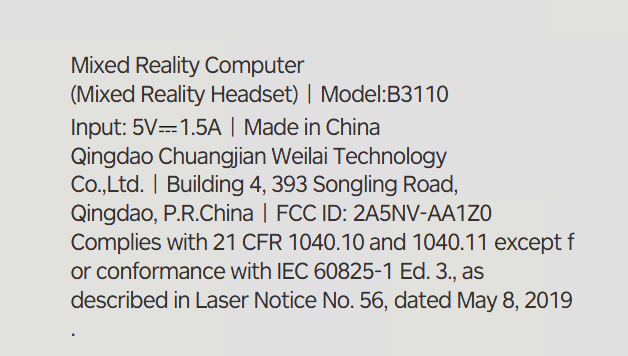
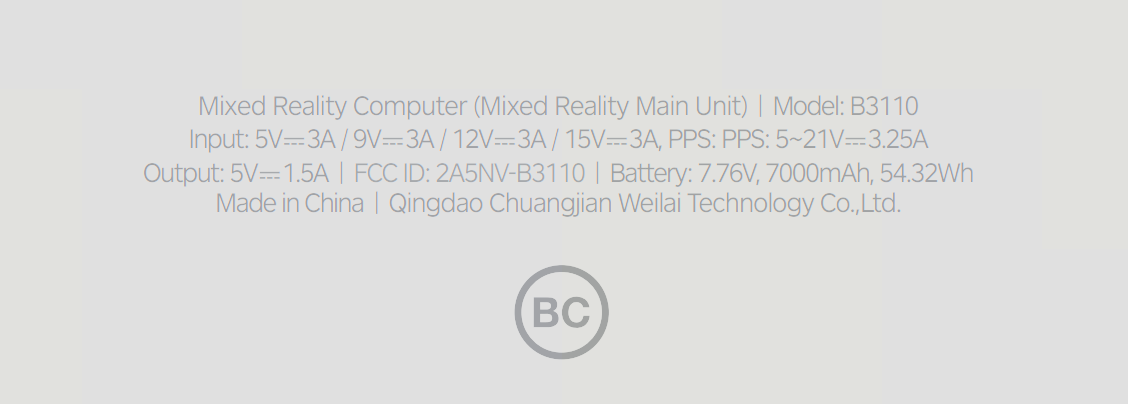
There is no Wi-Fi authorization shown under the headset's FCC ID, but the test documentation describes a radio operating between 2.402 and 2.480 GHz, and an nRF link with a controller. Meanwhile, the main unit's label explicitly lists a 7,000 mAh battery rated at 54.32 Wh, and the documentation lists support for Wi-Fi 7.
This strongly suggests that the external puck houses both the battery and at least some computing hardware, similar to XREAL's Aura and Meta's long-reported mixed reality device codenamed Phoenix.
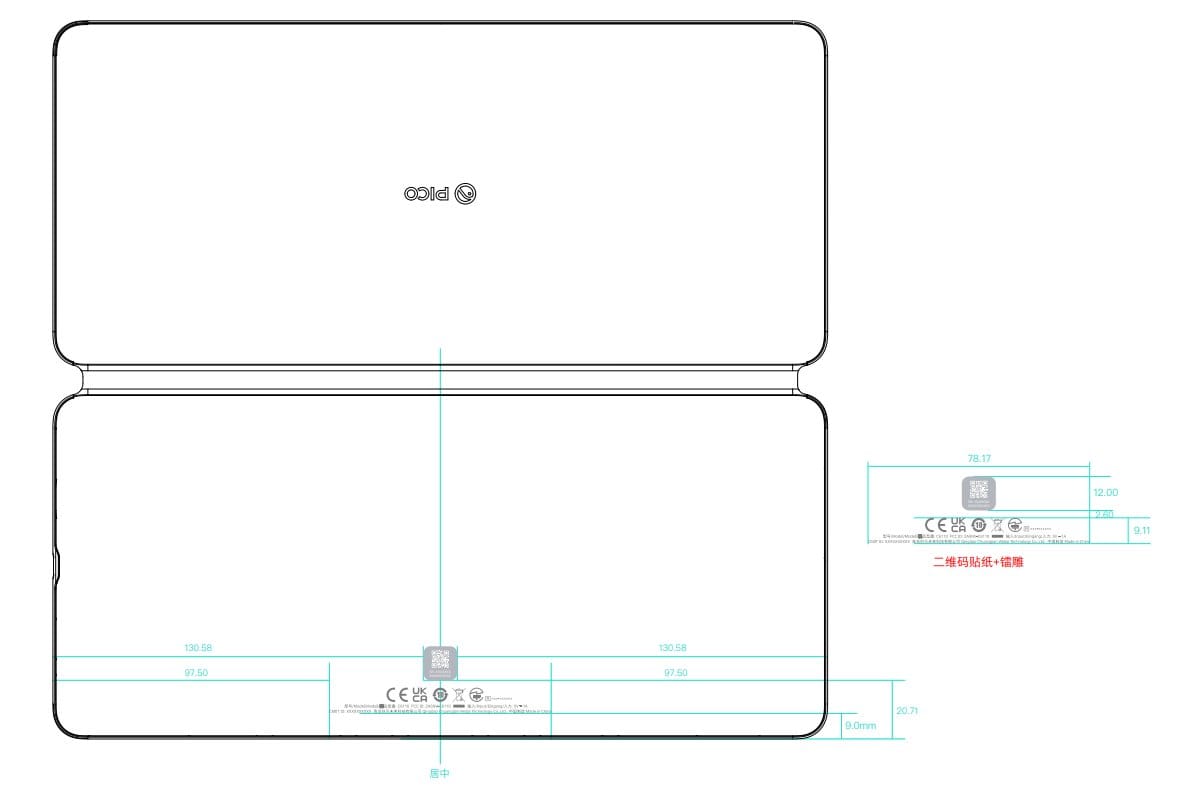
In July, Pico also received FCC certification for a new "Wireless Keyboard", FCC ID 2A5NV-C6110, which may be intended as an accessory for Space Pro.

It remains to be seen exactly when Pico Space Pro will launch, though the company says it is now targeting Q4 2026. Short-term confidentiality for documents in the FCC filings is set to expire on February 28, 2027.